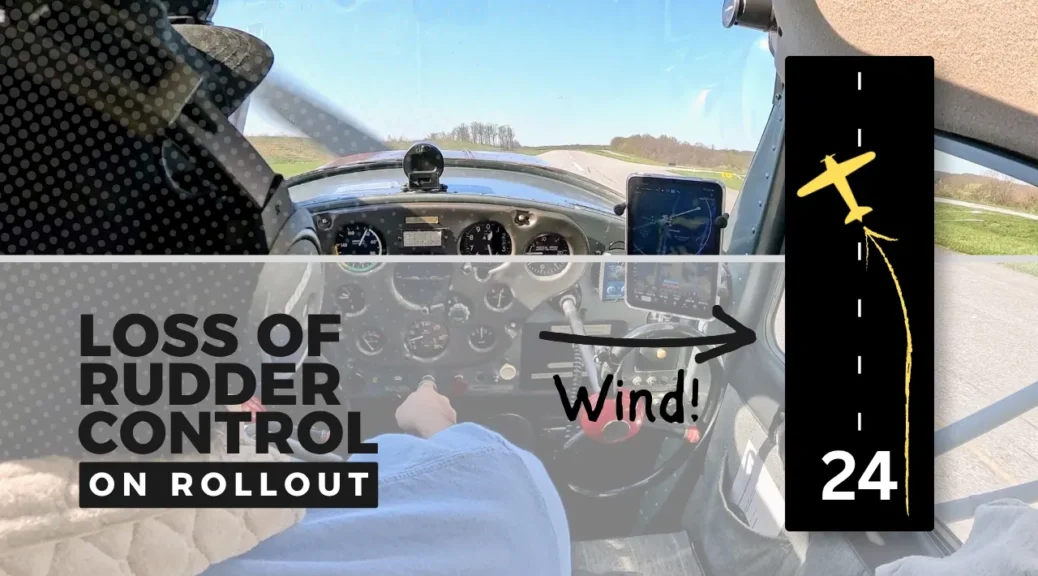
Loss of Rudder Control on Wheel-landing Rollout!
Sometimes a single flight teaches you a lesson you won’t forget.
In this video, I walk through a recent landing that drove home a fundamental concept in tailwheel flying—maintaining rudder and tailwheel authority during a wheel landing, especially in a crosswind.
Just a quick disclaimer: I’m not a flight instructor. This is simply my experience and what I took away from it. If you’re learning wheel landings, definitely talk through this with your instructor.
On this flight, I’m approaching an unfamiliar airport with a noticeable crosswind. The approach is a bit sporty, but manageable. After touchdown, I plant the mains and correctly apply aileron into the wind—but as I slow down and begin lowering the tail, things start to unravel.
With decreasing airflow over the rudder, I lose directional control. The crosswind pushes the tail, and despite full rudder input, it has almost no effect. It’s a pretty uncomfortable moment—you can actually see the airplane start to drift off the runway.
The key takeaway? Until the tailwheel is down and effective, you’re relying on airflow over the rudder—and when that airflow disappears, so does your authority. You’ll see both the cockpit perspective (including rudder inputs) and an outside view to really highlight what’s happening.
If you fly taildraggers—or are learning—this is one of those lessons that’s better understood before you experience it yourself.